Of late India witnessed a sharp fall in headline inflation - food inflation entered a deflationary zone, as it reached -3.91% in November 2025. If we look at the CPI trajectory followed by CPI over the last four years, the average retail inflation has seen steady decline from 6.7% in 2022-23 to 1.7% up to December 2025.
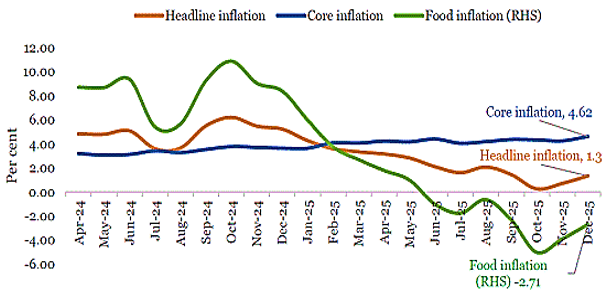
Figure 1: Headline, Core and Food Inflation- Calculated using Data from MoSPI [1]
H1 FY26 saw headline inflation declined sharply from 3.2% per cent in April 2025 to 1.4 % in September 2025, averaging 2.2% over the period. Inflation eased further to 0.3% in October 2025-the lowest reading in the earlier CPI (2012=100) series. Food inflation experienced a steady decline throughout the year, entering deflationary territory since June 2025 [2].
Deflation is characterized by a sustained fall in the overall price level of goods and services in an economy. Simply put, during depression articles of consumption become cheaper over a period of time. While this can sound like a positive development from the consumers' perspective, deflation generally comes with a red flag. In a scenario where prices are declining consistently, people generally tend to postpone spending today with the expectation that they will get a better deal tomorrow. The impact? An obvious reduction in demand, which then slows down production, adversely impacting the bottomline of business and can lead to job losses and wage cuts [3].
Based on data from early 2026, India has been experiencing a period of significant disinflation (lowering of inflation) with pockets of short-term deflation in specific sectors, particularly in food and wholesale prices. In 2025, the country saw a significant short-term disinflationary, and in some sectors, deflationary phase, defined by the headline Consumer Price Index (CPI) inflation touching a record low of 0.25% in October 2025, which was significantly below the Reserve Bank of India's (RBI) comfort level of 4% (2-6% target band).
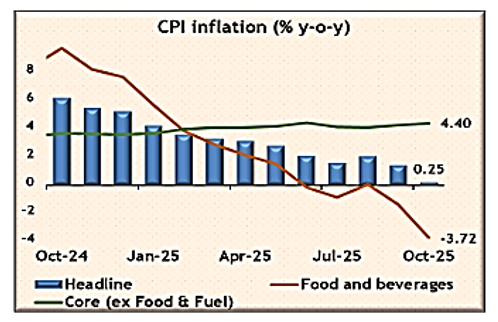
Figure 2: Prolonged period of decline in inflation [4]
Such sharp moderation in headline inflation came predominantly from a sustained and steep decline in vegetable prices (as mentioned above - an outcome of good monsoon and the consequent good harvest), which remained deeply negative for the larger part of the year, alongside a continuous fall in pulses inflation over nearly 9 odd months. In the food basket, the prices of protein-rich food items such as eggs, meat and fish had declined for some months, but recovered soon in the later months [2]. In parts, sluggish rural demand was also responsible for creating an "incipient deflationary pressure" on certain segments of the economy. The good thing was that it was caused by sustained fall in food prices rather than a " broad-based economic slump". A structural cause would have been difficult to correct and the economy would have taken a longer time to get out of it.
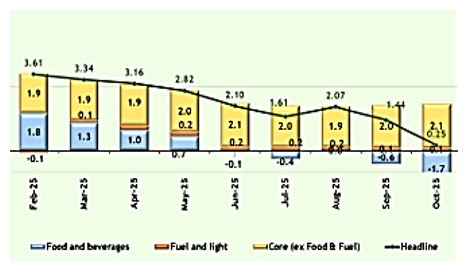
Figure 3: Contribution to Headline Inflation [4]
The deflation was supply driven and hence short-term or short lived. Favorable weather conditions, high agricultural production, and strategic government intervention (such as releasing buffer stocks and regulating trade) have resulted in a significant supply surge, particularly in vegetables and pulses.
Demand generally rises, with a little push (e.g. tax cuts that encourage purchase just like the GST cuts given effect in Sep'25), to match supply or supply reduces / normalizes after a while, bringing down the gap. In India's case food inflation is expected to rise moderately in 2026 after remaining deflationary through much of 2025. The projected uptick in inflation is principally the outcome of the fading of a favourable base effect. Also buffer stocks are at all-time high which is expected to keep sharp price spikes from happening.
In the global context, inflationary pressures continue, but some areas face deflationary pressures, notably China. What is happening in China is much unlike what is happening in India. China is seeing a consumption demand slump along with prolonged period of slowdown of real estate sector. A demand slump is harder to revive and stays on for a longer duration, needing structural changes to correct the situation. China has now been in deflation for 3 years running, the longest since it transitioned to a market economy in the late 1970s. India has been more fortunate from this perspective. The policy makers had been trying to boost demand periodically through tax cuts etc., to ensure a demand slump doesn't engulf the domestic economy.
References
[1] PIB, "FROM STABILITY TO STRENGTH: GROWTH ACCELERATES ALONG WITH LOWER INFLATION | Ministry of Finance: Government of India," 29 Jan 2026. [Online]. Available: https://www.pib.gov.in/. [Accessed 16 Feb 2026].
[2] PIB Delhi, "FROM STABILITY TO STRENGTH: GROWTH ACCELERATES ALONG WITH LOWER INFLATION | Ministry of Finance," 29 Jan 2026. [Online]. Available: https://www.pib.gov.in/. [Accessed 18 Feb 2026].
[3] B. Today, "Budget 2026: Deflation and disinflation simplified - definition, importance, when do they occur and more," Feb 2026. [Online]. Available: https://www.msn.com/en-in/money/topstories/budget-2026-deflation-and-disinflation-simplified-definition-importance-when-do-they-occur-and-more/ar-AA1UHavT. [Accessed 18 Feb 2026].
[4] Canara Bank - Economic Research Vertical , "India's CPI Inflation falls to Historic low of 0.25 % in October 2025 - Food Deflation and GST Cuts Drive the Slide," 12 Nov 2025. [Online]. Available: https://www.canarabank.bank.in/documents/d/guest/5-cpiinflationoctober2025. [Accessed 18 Feb 2026].

 Login
Login





 Register on SCORES Portal LEDO