Wealth is not just what you earn - it is what you keep after taxes. In India’s evolving tax landscape of 2026, the way you choose your tax efficient investments can make a difference of lakhs over a decade. Most investors focus only on pre-tax returns, but tax drag can quietly reduce long-term wealth creation. A smart tax saving investment plan helps you retain more of your gains while staying fully compliant with the law.
This guide from Eastern Financiers explains practical, legal, and effective strategies for investors who want to reduce tax impact without compromising on growth. It also covers top tax saving mutual funds and other proven methods that can support long-term wealth building.
Understanding the Tax Landscape in 2026
The Indian tax structure for investors includes several layers depending on asset class, holding period, and type of return. Understanding this is the foundation of every good tax saving investment strategy.
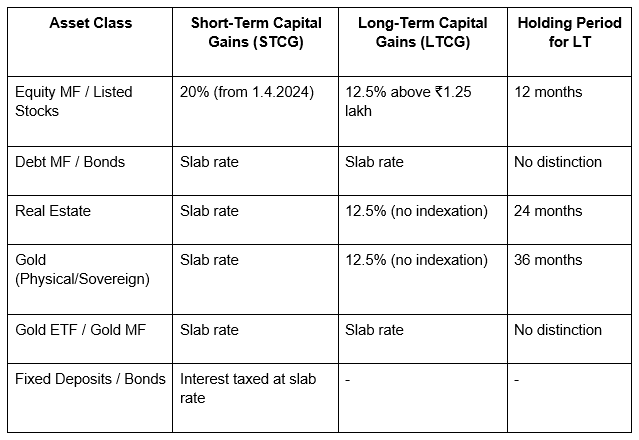
This table shows why tax efficient investments matter so much in 2026. The right structure can reduce the tax burden across equity, debt, retirement, and gold allocations.
Strategy 1: Maximise LTCG Exemption on Equities
Under current rules, LTCG up to ₹1.25 lakh per year from equity investments held over 12 months is tax-free. This is one of the most underused benefits available to Indian investors and a powerful part of any tax saving investment plan.
How to use it
At the end of each financial year, review your equity portfolio. If you have accumulated gains, sell and immediately repurchase units to harvest gains up to the tax-free limit. This is known as tax gain harvesting and resets your cost basis, reducing future tax liability.
For investors seeking tax efficient investments, this strategy can be one of the simplest and most effective ways to reduce long-term taxes.
Strategy 2: ELSS for 80C and Equity Returns
For investors on the old tax regime, investing up to ₹1.5 lakh in ELSS funds offers both tax savings and equity market exposure. Among the top tax saving mutual funds, ELSS remains one of the most popular categories.
Benefits of ELSS
- Tax deduction savings depending on your slab.
- Potential long-term equity returns.
- Only a 3-year lock-in, much shorter than PPF, NSC, or tax-saving FDs.
- Equity exposure with long-term compounding potential.
This makes ELSS one of the strongest tax saving investment options for salaried investors and long-term planners. If your goal is to combine growth with tax efficiency, top tax saving mutual funds in the ELSS category deserve serious attention.
Strategy 3: Debt via Arbitrage Funds
After the 2023 tax changes on debt funds, arbitrage funds emerged as a strong alternative for investors in higher tax brackets. These funds exploit price differences between cash and futures markets. Returns are often similar to liquid funds, but the taxation is treated like equity.
Why arbitrage funds matter
- STCG at 20% after 1 month holding.
- LTCG at 12.5% after 12 months.
- More tax-efficient than liquid funds for many high-income investors.
For people looking for tax efficient investments, arbitrage funds are especially useful when they want debt-like stability with better tax treatment. They are also a smart supporting option alongside other tax saving investment choices.
Strategy 4: SWP for Tax-Efficient Retirement Income
Retirees often place money in fixed deposits and end up paying full slab tax on interest. A smarter alternative is to use a Systematic Withdrawal Plan from a balanced or equity hybrid fund.
Why SWP works
- Only the gains portion is taxable.
- It can be more tax-efficient than FD interest taxation.
- It supports regular retirement cash flow.
For retirement-focused tax efficient investments, SWP can help convert accumulated wealth into a tax-lean income stream. It is also a practical way to preserve capital while reducing the tax burden.
Strategy 5: Use the HUF Structure
A Hindu Undivided Family, or HUF, is a separate taxable entity with its own PAN and basic exemption limit. This can be a useful structure for households looking to improve their tax saving investment framework.
How HUF helps
- Separate tax slab.
- Separate LTCG exemption.
- Additional flexibility for family wealth planning.
For eligible families, HUF can be one of the more effective tax efficient investments structures when used correctly and lawfully.
Strategy 6: NPS for Additional Tax Benefits
Beyond Section 80C, NPS offers additional deductions and retirement benefits. For many salaried individuals, it can be a valuable complement to top tax saving mutual funds and ELSS.
Key NPS benefits
- Additional deduction under Section 80CCD(1B).
- Employer contribution can also be tax-deductible.
- Part of the corpus may be withdrawn tax-free at maturity.
For investors in higher tax brackets, the NPS benefit can create meaningful annual tax savings. It is a practical addition to a broader tax saving investment strategy.
Strategy 7: Sovereign Gold Bonds Over Physical Gold
If you want gold exposure, Sovereign Gold Bonds are much more tax-efficient than physical gold or even gold ETFs in many cases.
Why SGBs stand out
- Gold price appreciation at maturity can be tax-free if held to maturity.
- No making charges.
- No storage costs.
- No impurity risk.
As tax efficient investments go, SGBs are one of the best ways to hold gold in a long-term portfolio. They can also help diversify a portfolio without adding unnecessary tax drag.
Strategy 8: Systematic Tax Planning Through the Year
The most tax-efficient investors do not scramble in March. They plan throughout the year, which allows them to make better use of top tax saving mutual funds and other options.
Annual tax planning calendar
- April to June: Review equity portfolio for LTCG harvesting opportunity.
- July to September: Check if advance tax payment is required.
- October to December: Start ELSS SIPs early.
- January to March: Final 80C investments, review NPS, and examine charitable deductions.
This year-round discipline turns tax management into a proactive tax saving investment system rather than a last-minute exercise.
How to Choose the Right Tax-Saving Mix
A strong portfolio does not rely on one product alone. Instead, it combines equity, debt, retirement, gold, and structural planning.
A practical mix may include
- ELSS for Section 80C.
- Arbitrage funds for surplus cash.
- NPS for retirement and extra deduction.
- SGBs for gold exposure.
- Equity LTCG harvesting each year.
This kind of portfolio is often stronger than chasing one-off products because it aligns with tax efficient investments at every stage of life.
Final Thoughts
In 2026, tax efficiency is not optional - it is an essential part of long-term wealth creation. The best investors are not just those who earn well, but those who structure their money well. Whether you are choosing top tax saving mutual funds, planning a monthly tax saving investment, or building a wider framework of tax efficient investments, the key is to stay consistent throughout the year.
Optimise your investment taxes with Eastern Financiers. Speak to our advisors for a personalised plan that fits your income, goals, and tax profile.
FAQ's:-
Why are tax efficient investments important in 2026?
They are important because taxes can significantly reduce long-term returns, so choosing the right structure helps investors keep more of what they earn.
What are the top tax saving mutual funds in India?
Top tax saving mutual funds usually include ELSS funds because they offer both equity exposure and Section 80C tax benefits.
How can retirees save tax on income?
Retirees can use Systematic Withdrawal Plans from balanced or hybrid funds to potentially reduce tax compared with fixed deposit interest.
Which are the top tax saving mutual funds for salaried investors?
ELSS funds are usually the top choice for salaried investors looking for tax savings and equity-linked growth.
Which tax efficient investments work for high-income taxpayers?
High-income taxpayers often benefit from ELSS, arbitrage funds, NPS, and LTCG harvesting strategies.
Are tax efficient investments better than fixed deposits?
In many cases, yes, because they can reduce tax drag and may offer better long-term post-tax returns than fixed deposits.

 Login
Login





 Register on SCORES Portal LEDO